| Listed product | Capacity & condition | US offer |
|---|---|---|
| 14TB New |
$359.99$25.71/TB View on Amazon ↗ Checked Oct 27, 2026 18:13 UTC | |
| 16TB New |
$449.99$28.12/TB View on Amazon ↗ Checked Oct 27, 2026 22:26 UTC | |
| 24TB New |
$679.99$28.33/TB View on Amazon ↗ Checked Oct 27, 2026 22:23 UTC | |
| 12TB New |
$349.99$29.17/TB View on Amazon ↗ Checked Oct 27, 2026 22:21 UTC | |
| 18TB New |
$549.99$30.55/TB View on Amazon ↗ Checked Oct 27, 2026 22:20 UTC | |
| 16TB New |
$499.99$31.25/TB View on Amazon ↗ Checked Oct 27, 2026 18:09 UTC |


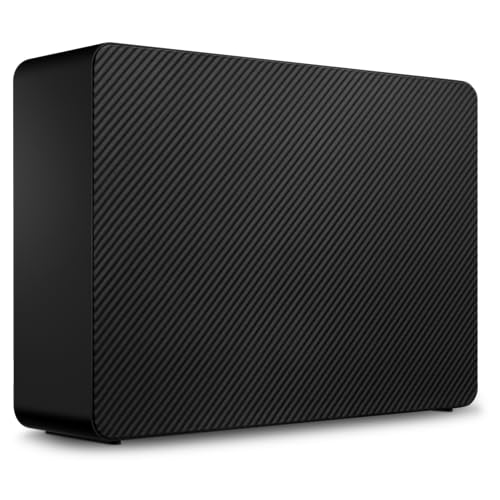
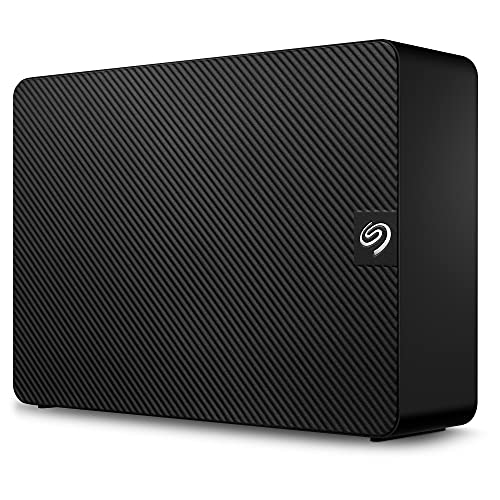
As an Amazon Associate I earn from qualifying purchases. Prices are per listed product; Amazon’s price and availability at purchase apply.
1. Work out the saving at the same capacity
Compare two new 16TB offers with each other, rather than a new external drive against an unlabelled used internal listing. Subtract the external price, any required mounting parts and shipping from the bare-drive total. For an illustration only, a $240 bare drive versus a $200 external drive leaves a $40 difference before other costs. That is not a current price quote or a prediction of future discounts. Compare the complete drive-set cost if you need several drives; do not assume a listing permits the full quantity.
2. What drive is inside a WD Elements, My Book or other external?
Check the product documentation instead of treating an enclosure teardown as a promise. Western Digital says the internal model, recording technology and data interface are not guaranteed by the external enclosure specification. Its external products may contain SATA or native-USB designs, CMR or SMR, and air or helium drives. A report about one unit is evidence about that unit, not every later unit sold under the same name. An external capacity or product image therefore cannot verify the internal model you will receive.
Source: Western Digital: drive types inside external enclosures
3. Confirm CMR and NAS compatibility separately
Once an exact internal model can be identified, check its manufacturer specification and your enclosure’s supported-drive list. A large capacity, white label or enterprise-looking part number is not a substitute for a documented recording method. CMR also does not establish the correct sector format, power behaviour, mounting arrangement or firmware support for a particular NAS. If you need a specific approved model before paying, compare a bare-drive listing that names it.
4. SATA pin 3: why some drives do not spin up
Power Disable is a feature on certain SATA drives. Western Digital’s technical brief explains that a high signal on power-connector pin 3 can hold a compatible drive in reset; some legacy power connections supply voltage on that pin. This is one possible cause of a no-spin symptom, not a diagnosis of every unresponsive drive. Check the exact drive and power-system documentation. Use a supported power connection or qualified help rather than guessing at a cable modification. Keep the system powered off and disconnected while changing hardware.
5. Read the warranty terms before opening anything
Western Digital’s external-enclosure guidance states that opening a single-drive enclosure voids its warranty. Seagate’s limited warranty also excludes specified alterations, including unauthorized component or external-cover removal. Check the applicable product, seller and regional terms before purchase; statutory rights can differ. Do not assume the drive inside has a separate retail warranty, or that putting it back in the case restores coverage. Preserve the receipt and describe any modification accurately if you request service.
6. Test the intact product and protect existing data
Back up anything you need before testing or moving the drive. Record the external product and serial number, then use the manufacturer’s documented diagnostics to check the intact unit. SeaTools distinguishes diagnostic tests from repair and erase functions; select the intended test and read its current instructions. Do not run a full-drive write, erase, sanitize or repair operation assuming it preserves data. A passing test does not guarantee future reliability. If you proceed with removal, use instructions for that exact enclosure and check the resulting drive before adding it to an array. RAID is not an independent backup.
Source: Seagate: SeaTools Bootable tests and erase operations
Shucking versus buying a bare drive
| Buying check | External drive for shucking | Documented internal drive |
|---|---|---|
| Purchase cost | Compare the current external offer and required parts | Compare the same capacity and condition |
| Exact internal model | May not be specified before purchase | Check the exact part number against the listing |
| CMR or SMR | Do not infer it from the enclosure or capacity | Verify the model in manufacturer documentation |
| Power and interface | Check the internal connection and Power Disable behaviour | Still check SATA/SAS, power and sector compatibility |
| Warranty and returns | Read modification restrictions before opening | Verify seller, serial eligibility and new/used terms |
| Decision | Consider only if the real saving justifies the uncertainty | Useful when a known model and documented support matter |
| Model & capacity | Fit & specifications | US offer |
|---|---|---|

Western Digital WD Red PlusWD120EFGX
|
12TB per bay. Check usable capacity after RAID and your NAS compatibility list. |
$529.99$44.17/TBView on Amazon ↗ — WD120EFGX, newChecked Oct 27, 2026 18:13 UTC |

Seagate Exos X18ST14000NM001J
|
Bulk storage candidate. Check sector format, cooling and the warranty provider. |
$684.75$48.91/TBView on Amazon ↗ — ST14000NM001J, newChecked Oct 27, 2026 22:23 UTC |

Toshiba N300 ProHDWG81GXZSTB
|
16TB per bay. Check usable capacity after RAID and your NAS compatibility list. |
$677.08$42.32/TBView on Amazon ↗ — HDWG81GXZSTB, newChecked Oct 27, 2026 18:14 UTC |

Seagate Exos X18ST18000NM000J
|
Bulk storage candidate. Check sector format, cooling and the warranty provider. |
$712.00$39.56/TBView on Amazon ↗ — ST18000NM000J, newChecked Oct 27, 2026 22:23 UTC |

Toshiba N300 ProHDWG82AXZSTB
|
20TB per bay. Check usable capacity after RAID and your NAS compatibility list. |
$766.99$38.35/TBView on Amazon ↗ — HDWG82AXZSTB, newChecked Oct 27, 2026 22:24 UTC |

Western Digital WD GoldWD221KRYZ
|
Bulk storage candidate. Check sector format, cooling and the warranty provider. |
$1,045.33$47.51/TBView on Amazon ↗ — WD221KRYZ, newChecked Oct 27, 2026 22:23 UTC |
Specifications: linked manufacturer model pages. Selection covers different capacities and families; it is not a reliability ranking. Prices are per listed drive; Amazon’s price and availability at purchase apply.
Frequently Asked Questions
Does a 12TB or larger external drive guarantee CMR?
Is an external HDD always cheaper than an internal HDD?
Can any shucked drive be used in a Synology or QNAP NAS?
Should I keep using the drive over USB instead?
Sources
Ready to find the best deal?
Compare Amazon US offers by capacity, condition and price per TB.